MODULE 1 EPORTFOLIO
TERRITOTIAL LAND ACKNOWLEDGEMENTS:
Asking Questions
This made me think about how easy it can be to say a land acknowledgement without really thinking about its meaning. I am learning that it should be more than just words we say at the beginning of a class or meeting. It should be meaningful and connected to the land and the people who have cared for it for generations.
As I live in Cranbrook, I want to learn more about the Ktunaxa people and the land around me. A question I want to keep thinking about is: If I acknowledge the land, how am I showing that I respect and care for it?
Exploring Resources
Purpose & Meaning
- Respectfully entering and acknowledging another territory
- A protocol that has been practiced by Indigenous communities since time immemorial
- Often used at the beginning of meetings, gatherings, classes, and events
- An act of:
- Reconciliation
- Honour
- Respect
- Recognizing the original land holders/stewards
- Should be meaningful and intentional, not something said just because it is expected
- Give thanks for the land and what it provides
- Stay focused and avoid going off topic
Learning About the Land
- Research the original stewards of the land you are on
- Learn about the treaties connected to your area
- Learn about the land itself:
- Rivers and waterways
- Trees
- Fruits and plants
- Flowers
- Insects
- Two-legged and four-legged living creatures
- Hills and other natural features
- Water, sky, and stars
Connection & Responsibility
- Recognize that the land includes more than just the physical ground
- Acknowledge the interconnectedness of the land and all living things
- Land acknowledgements can remind us that the land takes care of us, and we have a responsibility to take care of the land
- Look for ways to incorporate what you learn about the land into other areas of learning and daily life
- Make acknowledgements personal, authentic, and heartfelt
SD5 Land Acknowledgement
Review of SD5’s Land Acknowledgement
- School District 5’s land acknowledgement states, “The footprint of our School District is fully contained within the Ktunaxa Nation, including the communities of ʔaq̓am and Yaq̓it ʔa·knuqⱡiʾit.” This acknowledgement is used throughout the district and on individual school websites.
- I was unable to find specific information about who originally wrote the acknowledgement or the exact process used to create it. I would assume that the wording was created in collaboration with the Ktunaxa Nation, and the SD5 school board as the acknowledgement is recognizing their traditional territory. The words are meaningful because they specifically identify the Ktunaxa Nation and the two communities within the school district, rather than using a broad term such as “Indigenous land.”
- I think the acknowledgement is specific and appropriate to our local area, but it is also very short and factual. It could be made more personal by including some of the history and relationship that the Ktunaxa people have with the land, as well as a statement about our responsibility to respect and care for the land. This would help students and staff understand not only whose land we are on, but why we are acknowledging it and what that acknowledgement means.
My Land Acknowledgement
I acknowledge that I live and work on the traditional and unceded territory of the Ktunaxa Nation, including ʔaq̓am and Yaq̓it ʔa·knuqⱡiʾit. I am grateful to learn, teach, and grow within this community and recognize the Ktunaxa people as the original stewards of this land. I am committed to continuing my learning and encouraging respect for the land, its people, and their knowledge within my classroom.
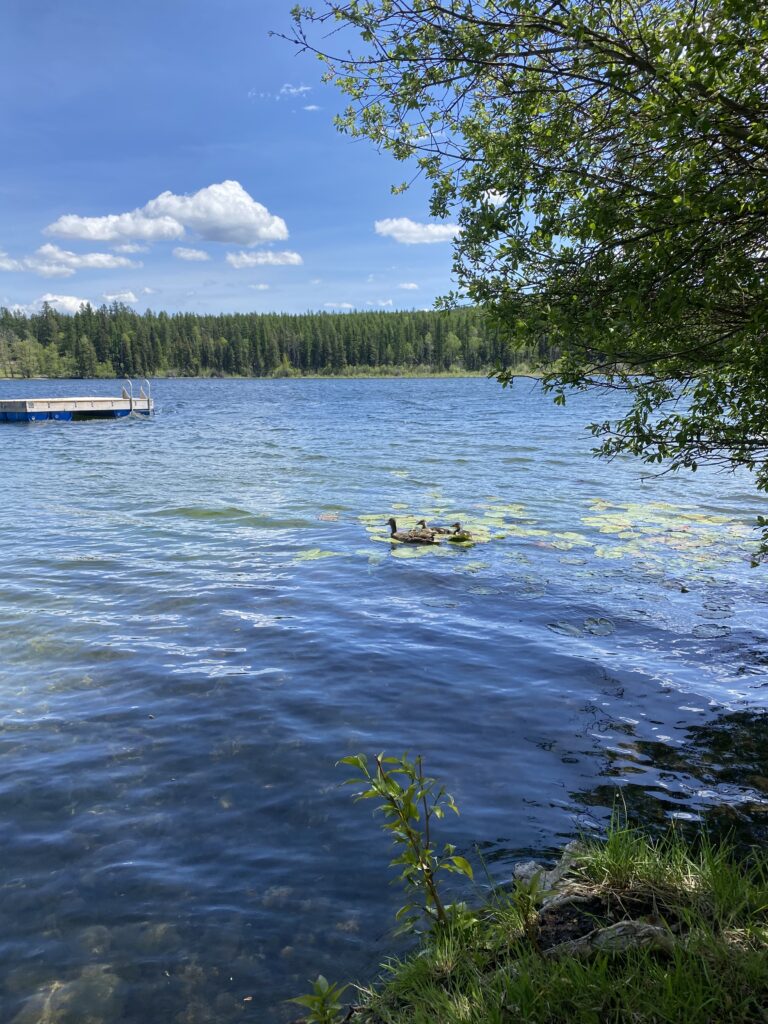
I chose to include this photo with my land acknowledgement because it is a picture of the lake where I live and the animals that call it home. I am grateful to have such beautiful land so close to me and to experience the wildlife and natural beauty that surrounds me every day. This photo reminds me to appreciate the land I live on and the responsibility I have to respect and care for it.
Audio of my land acknowledgement:
BEING AN ALLY
What does being an ally mean?
- Being an ally is not a title or badge that you give yourself.
- You become an ally through your actions, relationships, and commitment.
- Allyship is an ongoing process, not something you complete.
- It involves:
- Learning
- Listening
- Self-reflection
- Building relationships
- Taking meaningful action
- Being an ally means recognizing that Indigenous communities should lead their own stories and experiences.
Different roles
- Ally: Supports the struggle and educates others about Indigenous histories and realities.
- Accomplice: Directly challenges racist and oppressive systems, policies, and structures.
- Co-resistor: Works alongside communities and is deeply involved in resisting oppression while continuing to learn.
Step 1: Examine Your Motivations
Before getting involved, ask yourself:
- Why am I interested in this?
- Am I doing this because the issue is currently popular?
- Am I doing it for recognition, funding, or personal benefit?
- Am I putting my own opinions ahead of Indigenous voices?
- Am I making the issue about myself?
- Am I listening to what Indigenous communities actually need?
Important reminder:
- The focus should be on the community, not yourself.
- Allyship should not be about checking items off a list.
- Privilege should be recognized and used to support people who experience oppression.
Step 2: Learn
- Educating yourself is an ongoing process.
- You don’t need to become an expert before you can begin acting.
- Learn about:
- Indigenous histories
- Colonization
- Current Indigenous realities
- Local Nations and communities
- Indigenous terminology
- Indigenous perspectives and knowledge
- Indigenous people are not defined only by their experiences with oppression—they are families, professionals, artists, teachers, parents, children, and community members.
- Recognize Indigenous resilience and the fact that Indigenous communities continue to thrive.
Important Terminology
- Indigenous: An umbrella term that includes First Nations, Métis, and Inuit.
- First Nations: Refers to many distinct Nations with their own cultures, languages, and histories.
- Inuit: Indigenous peoples of the Arctic regions; Inuit is plural and Inuk is singular.
- Métis: A distinct Indigenous people with connections to historic Métis communities.
- Settler: Generally refers to people whose ancestors migrated to Canada and who continue to benefit from colonial systems.
- Turtle Island: A term used by some Indigenous peoples to refer to North America.
- Pow wow: A traditional First Nations gathering involving dance, song, socializing, and celebration—not a general term for a meeting.
- Two-Spirit: A term used specifically by Indigenous people and connected to Indigenous understandings of gender and sexuality.
Step 3: Act
- Learning is only half of allyship.
- Put your learning into action.
- Listen to Indigenous experts and communities.
- Ask what you can do to help rather than assuming what is needed.
- Build relationships based on trust and mutual consent.
- Continue researching and learning.
- Support Indigenous communities in meaningful ways.
- Speak up when you see racism or oppression, even when it is uncomfortable.
- Be willing to make mistakes, learn, and keep going.