Final Inquiry Project
MY FUTURE CLASSROOM
What I am taking with me from CONT 926:
When I started this course, I thought about Indigenous education mostly in terms of what I needed to learn. As I move toward the end of the course, I have started thinking more about how this learning will shape the teacher I become. This final inquiry project is a look inside my future classroom and the ideas I want to carry with me.
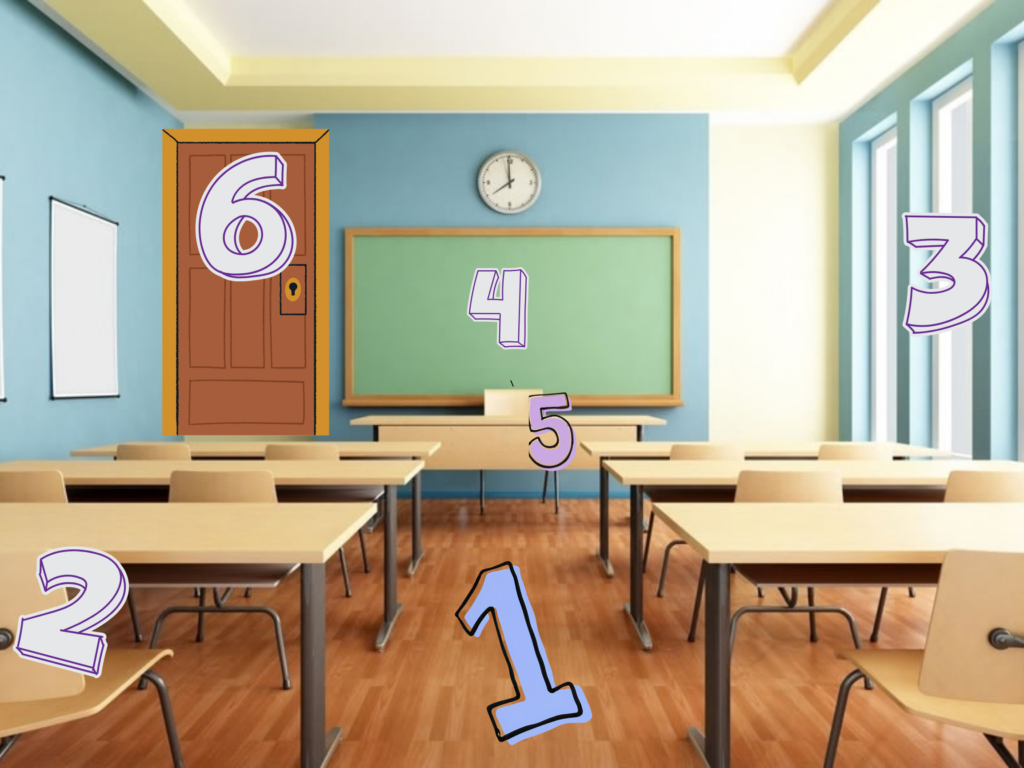
1 — The Land
What I learned:
Meaningful land acknowledgements require more than saying the correct words. I need to understand the land, the people connected to it, and my own responsibility.
What this will look like in my classroom:
- Learning about the local Ktunaxa Nation
- Connecting learning to local land and place
- Using meaningful land acknowledgements
- Including land/place-based learning
Something I am still wondering:
How can I keep my students’ connection to land meaningful rather than turning it into another routine?
2 — The Community
What I learned:
Learning is relational. Elders, Knowledge Keepers, families, students, and community members all have important knowledge to share.
What this will look like:
- Building relationships before expecting learning
- Listening to students
- Creating opportunities for sharing and storytelling
- Learning appropriate protocols when working with Elders and Knowledge Keepers
Still wondering:
How can I respectfully build these relationships as a non-Indigenous teacher?
📌 My connection: Witnessing + deep listening + Elders
3 — The Windows
The Windows: Whose perspective are we seeing?
Before I use a resource, I want to ask:
Who created this?
Whose voice is represented?
Whose voice is missing?
Is the information respectful and accurate?
Does it represent Indigenous Peoples as living communities today?
Am I making assumptions?
What I Am Still wondering:
How can I make sure I am teaching Indigenous content accurately without relying on a single perspective?
📌 My connection: Words Matter + Single Story + authentic resources
4 — The Learning Space
Learning can happen through…
🌿 Land
🤝 Relationships
💬 Story
👂 Listening
🎨 Experience
🪞 Reflection
❤️ Community
I began this course thinking about Indigenous perspectives as something I needed to learn about. I now understand that the First Peoples Principles of Learning can influence how I teach, not just what I teach.
📌 My connection: FPPL + Two-Eyed Seeing
5 — The Assessment Table
How will students show what they know?
A student could…
✏️ Write
🎨 Draw
🗣️ Speak
🎭 Act
🧱 Build
🌱 Demonstrate
💭 Reflect
My learning about Indigenous approaches to education has made me think more carefully about assessment. Students do not all need to demonstrate their learning in exactly the same way. I want to create opportunities for students to use their strengths and different ways of communicating their knowledge.
📌 My connection: Decolonizing assessment + your Grade 1 assessment work
6 — The Door
Where does the learning go from here???
LEARNING
↓
REFLECTION
↓
RELATIONSHIPS
↓
ACTION
I am leaving this course with more questions than I started with, but I now understand that this is part of ongoing learning. My goal is not to consider myself an expert in Indigenous education. My goal is to continue learning, listening, building relationships, and reflecting on my teaching.
This isn’t a finished classroom. It is a classroom I will continue learning how to build.
Final Reflection
Looking back on this course, one of my biggest takeaways is that Indigenous education is not something that can be treated as one lesson, one unit, or something I “check off” as a teacher. I have learned that it is an ongoing process of listening, learning, reflecting, and building relationships. At the beginning of the course, I focused a lot on things like using respectful terminology and creating meaningful land acknowledgements. As the course continued, I began to see how these ideas connect to much bigger questions about relationships, land, identity, history, education, and reconciliation.
One thing I want my learning community to take note of from my work is how much my thinking around relationships has grown. Learning about witnessing and deep listening, kinship, Elders and Knowledge Keepers, and the importance of relationships with land helped me think differently about what it means to be a teacher. I do not want Indigenous perspectives to be something I simply add into my classroom. I want them to influence how I build relationships, how I listen to my students and community, how I choose resources, and how I approach learning.
I also learned that learning about Indigenous education requires moving from learning to action. My understanding of reconciliation has become more connected to what I can actually do as a future teacher. This includes continuing to learn, questioning the resources and perspectives I bring into my classroom, creating space for different ways of knowing, and making sure students feel that their voices and experiences matter.
Most importantly, I am leaving this course knowing that I will not have all the answers. Instead of seeing that as a weakness, I see it as a reason to keep learning. I want my future classroom to be a place where I am willing to listen, reflect, ask questions, build relationships, and continue learning alongside my students and community. My learning from this course is not an ending; it is something I will carry forward into my teaching.
Answering My Inquiry Question
How can I meaningfully and authentically incorporate Indigenous perspectives and the First Peoples Principles of Learning into my everyday classroom practice?
I can meaningfully incorporate Indigenous perspectives and the First Peoples Principles of Learning by making them part of how my classroom functions, rather than treating Indigenous learning as a special topic or one-time lesson. Throughout this course, I have learned that authentic Indigenous education begins with relationships, respect, listening, and a willingness to continue learning.
In my everyday classroom, this could look like:
- Building relationships: Taking time to build relationships with students, families, the local community, and, when appropriate, Elders and Knowledge Keepers. I want my classroom to be a place where relationships are an important part of learning.
- Learning through place: Connecting learning to the land and local environment through outdoor learning, observation, stories, and activities connected to the place where students live. I can also make sure that local Indigenous knowledge and perspectives are included respectfully rather than using generalized “Indigenous” activities.
- Using the FPPL: Creating opportunities for students to learn through experience, reflection, relationships, storytelling, and connection to place. For example, students could learn outdoors, work collaboratively, share their thinking in a circle, and reflect on what they learned and how it connects to their lives.
- Listening and witnessing: Giving students time to listen to one another and share their own experiences. I want to practice deep listening myself and show students that listening is an important part of learning.
- Choosing resources carefully: Looking at who created a resource, whose voices are represented, and whether the information is respectful and accurate. I want to use authentic resources and avoid presenting Indigenous peoples as only part of the past.
- Creating different ways to show learning: Providing students with different ways to demonstrate what they know, such as speaking, writing, drawing, creating, building, or demonstrating. This connects to the FPPL idea that learning is holistic and experiential.
- Continuing to learn: Recognizing that I will not know everything. As a future teacher, I need to continue learning from Indigenous voices, local communities, and appropriate resources rather than assuming that one course has given me all the knowledge I need.
For me, authenticity means not simply adding Indigenous content to my classroom, but allowing Indigenous perspectives and the FPPL to influence how I teach, how I build relationships, how students learn, and how I understand my responsibility as an educator. This is something I want to continue developing throughout my teaching career.